The signals each type sends when a friendship drifts
What to know before you say you're hurt
What’s this article about, in short?
A friend who suddenly makes fewer plans, a friend whose texts got shorter. The type-by-type signals to know before you tell them you're hurt. We walk through it step by step: What to know before you say you're hurt.
Friends usually drift apart not because of one big fight but because small signals pile up. Plans get fewer, replies get shorter, and even when you meet, the conversations don't run as long as they used to. But these signals don't always mean "I want to pull away from you." They might be tired, their life might have changed, or they might not know how to say they're hurt. How to read the signals differs a bit by personality.
How do the drifting signals start?
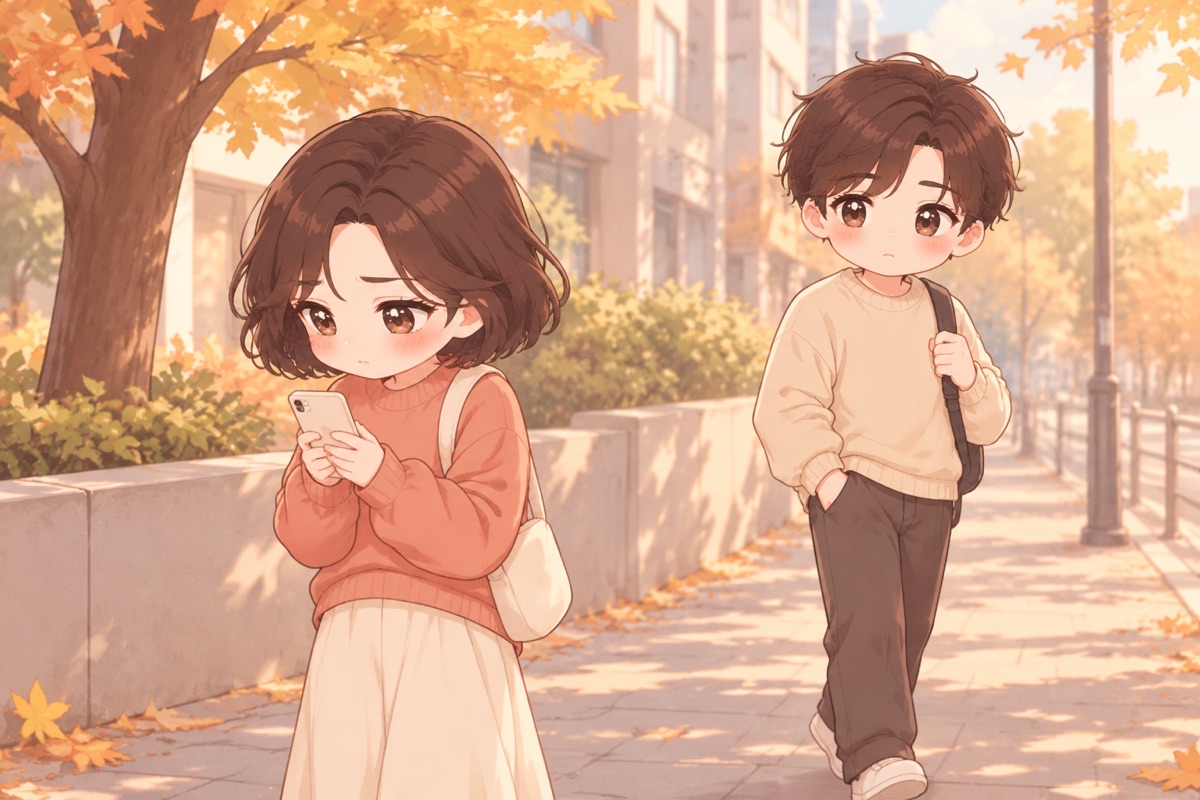
Picture this. A friend you used to see at least once a month has pushed back plans twice in a row. The reason: "Things have been kind of busy." You feel hurt but it's awkward to show it. Your friend really is worn out from job hunting, but doesn't have the bandwidth to bring it up. If neither of you says anything, this small mismatch turns straight into distance.
How do drifting signals differ by trait?
| Trait | Common signal when drifting | What the real reason might be |
|---|---|---|
| E (Extraversion) | Lots of news about other hangouts, but fewer plans with you | Spending energy on a new crowd |
| I (Introversion) | Goes quiet and stops reaching out | Worn out and recharging alone |
| S (Sensing) | Short, update-only chats when you meet | Life is busy and they have no bandwidth |
| N (Intuition) | Stops bringing up deep topics like before | Feels your interests have grown apart |
| T (Thinking) | Sticks to logistics and shares less personal stuff | Hasn't put their hurt feelings into words |
| F (Feeling) | Warm on the surface, but never reaches out first | Holding in hurt feelings |
| J (Judging) | Doesn't make plans and keeps saying "next time" | Schedule is packed and you slipped down the list |
| P (Perceiving) | Texts drop off suddenly, then pick back up | Attention shifts from moment to moment |
People who take good care of their relationships, like ESFJ, notice drifting signals faster than anyone. That's also why they get hurt more easily. But a friend who doesn't tend the friendship at the same pace isn't necessarily a friend who doesn't care.
What should you check before saying you're hurt?
- Think about whether your friend has had a big change lately. A new job, a move, a relationship, a new baby
- Ask yourself whether you've just been waiting for them to reach out
- Figure out whether what hurts is "how often" or "how they act"
- Think about how close you actually want this friendship to be
How can you bring it up without hurting the friendship?
If you miss them, don't build up guesses. Reach out first, lightly. Curiosity and your own feelings work better than blame.
- What to avoid: "Are you avoiding me lately?"
- What to say instead: "It's been a while since I've seen you. Once things calm down, let's grab dinner. I've missed you."
If something really did hurt, bring up just that one thing. "It kind of hurt when you canceled the day of last time. Next time, I'd love a heads-up." If you bring up every past hurt at once, they'll get defensive first.
What if you still drift apart?
Not every friendship stays the same distance for life. When your life changes, the friends you see often change too. Lots of friendships drift apart and then get close again years later. If you've reached out as much as you can, it's okay to leave the rest to time.
Small habits for a friendship that lasts
- Remember birthdays and big days, even with a short message
- Even when you can't meet, send a quick "Thought of you, so I'm texting"
- Don't let hurt feelings pile up; say something while they're small
- Don't judge your friend's texting style by your own standards
FAQ: What if I'm always the one who reaches out first?
Always being the one who reaches out can wear you down. In that case, it's okay to pull back on texting for a while and see how they respond. If your friend checks in first, you just had different texting styles. If there's no response at all, it's okay to put a little less energy into that friendship for now. Balance in a relationship isn't something you fix all at once. You find it slowly.
More important than noticing the drifting signals is the courage to reach out first when you see them.
If you've been reading too much into your friends' reactions in the group chat, check out "Left on read in the group chat: what each type really means" too. And if you want to see your friend group's chemistry based on everyone's MBTI, open Group Chat Chemistry in the Playground.
First impression vs. once you’re close
Drag the middle bar left or right. Slide it all the way to see just one side.
ESFJ
- Friendly and social
- Looks after everyone
- Seems a bit nosy
ESFJ
- Truly wants others to be happy
- Gets hurt feelings fairly easily
- Remembers every day you spent together
Playground picks for this article
You might also like
 Friends & Relationships
Dive from Extravert 100 to Introvert 100
The farther you scroll, the lower the extraversion gets. Head below the surface to meet all 16 types. At what depth do you live?
 Friends & Relationships
Left on Read in the Group Chat: What Each Type Is Really Thinking
A friend read your message and never replied. Should you really be hurt? The different texting habits and inner thoughts of each type.
 Love & Chemistry
ESFJ in love: What to say when being the caretaker wears you out
ESFJ partners often show love by taking care of you. Here's why that wears them out, how to turn hurt into a clear ask, and lines you can use today.